Agentic Commerce for Shopify Brands: What It Is and How to Prepare
Agentic commerce is shopping in which an AI shopping agent does part of the buying for the shopper: it reads the request, finds and compares products, answers questions about them and, in some channels, checks out. For a Shopify brand it is already live. Shopify sends eligible stores' products to ChatGPT, Google AI Mode and Gemini, Microsoft Copilot and Meta by default, so the question is not whether to join but whether the agent picks your product when it gets there.
Shoppers are already there. In 40rty's October 2026 survey of 1,614 US online shoppers, 51% said they already use AI to help them shop. Two in three of those AI shoppers have seen it get product information wrong, and 65% of them walked away from the purchase. This guide covers how agentic commerce works on Shopify and what to fix first. Platform sources are linked inline and were checked on October 29, 2026.
What Changes When an Agent Shops
Search sends a shopper to ten links, and the shopper does the comparing. An agent does the comparing itself and comes back with a few products, sometimes one. Three things follow:
- The shopper describes a need, not a product. “Waterproof trail shoes for wide feet under $150” is a prompt. Your product has to match it on facts the agent can read, not on a brand name the shopper never typed.
- Your product data is the sales pitch. The agent reads titles, descriptions, attributes, variants, prices and policies. A banner, a lifestyle video or a clever tagline does little for a reader that wants specs.
- Wrong data loses the sale outright. In our survey, 37% of shoppers who got wrong information from AI bought from another brand or store, and 28% didn't buy at all.
It is also a discovery channel. Two in three AI shoppers in the same survey have discovered a new brand through AI, and 38% have bought from a brand it introduced them to.
How Agentic Commerce Works on Shopify
Shopify's Agentic Storefronts are how Shopify puts your products into AI channels. It is active by default for eligible stores. The channel decides where the shopper pays:
| AI channel | How your products get there | Where the shopper checks out |
|---|---|---|
| ChatGPT | Shopify Catalog, active by default for eligible stores | Your online store checkout, in ChatGPT's in-app browser or a new tab |
| Google AI Mode and Gemini | Shopify Agentic Storefronts | Shopify-powered direct checkout in the channel, if direct checkout is activated |
| Microsoft Copilot | Shopify Agentic Storefronts | Shopify-powered direct checkout in the channel, if direct checkout is activated |
| Meta surfaces such as Muse | Shopify Agentic Storefronts | Shopify-powered direct checkout in the channel, if direct checkout is activated |
Shopify's ChatGPT page says you don't need to do anything for ChatGPT to discover your products through Shopify Catalog. For the full channel-by-channel setup, see Shopify Agentic Storefronts.
The Protocols Underneath
Two open standards define how agents and stores talk. You will hear both names, and on Shopify you mostly don't have to implement either:
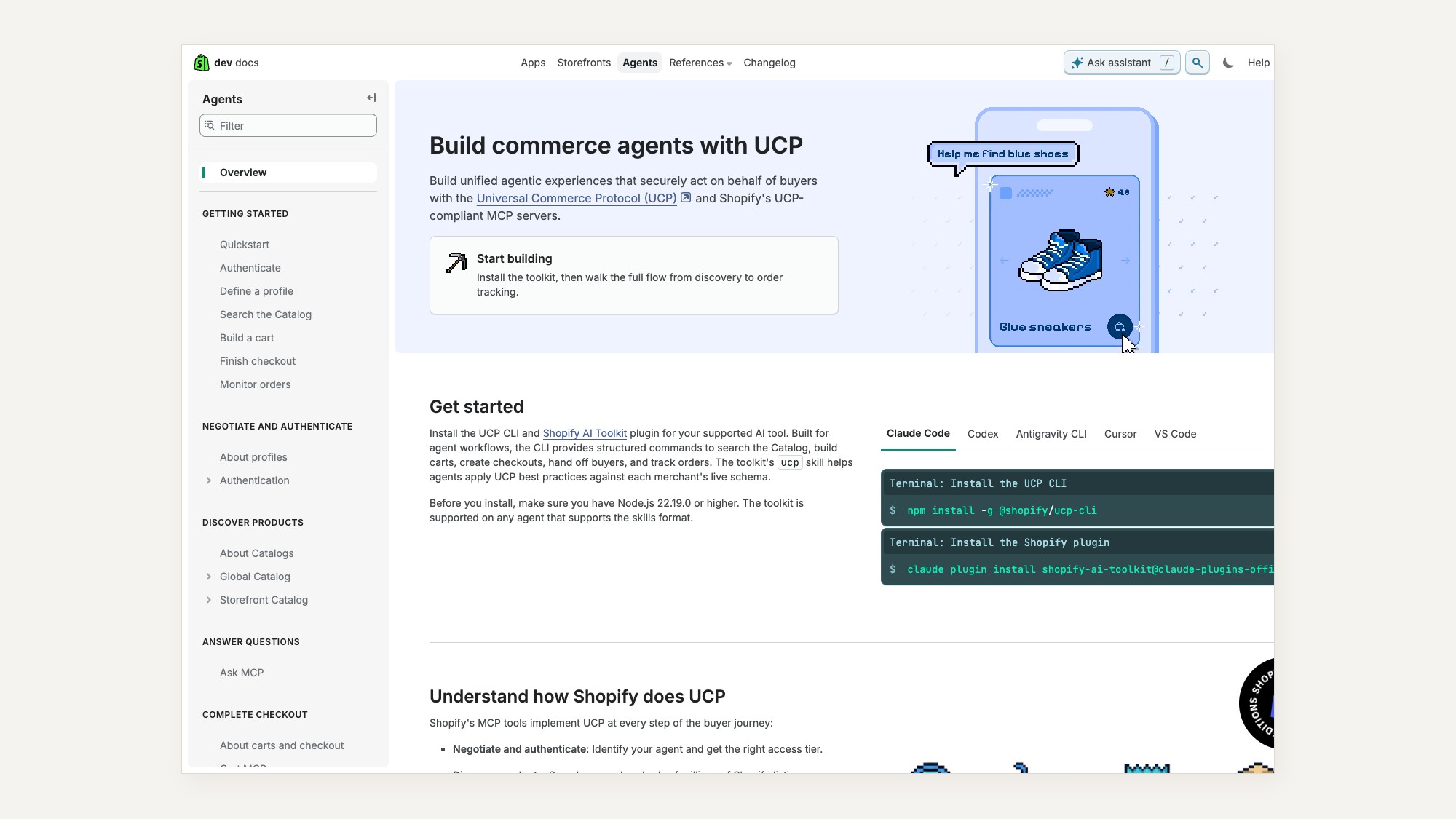
- Universal Commerce Protocol (UCP). Announced by Google with Shopify among the co-developers. It covers catalog search, carts, identity linking, checkout and orders, and Shopify storefronts already publish a UCP profile. See our UCP guide.
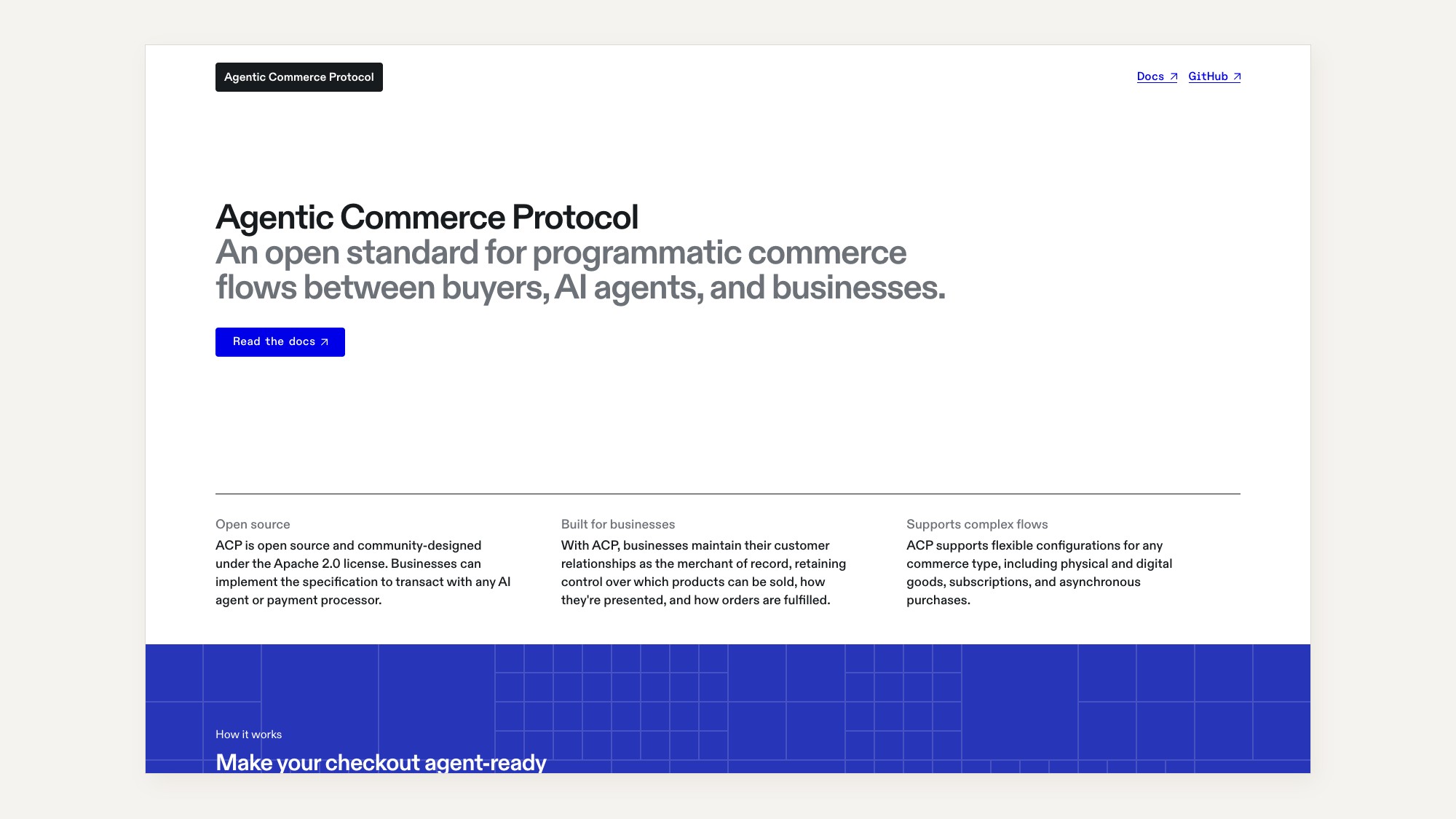
- Agentic Commerce Protocol (ACP). Developed by Stripe and OpenAI and open source under Apache 2.0. OpenAI's docs describe a product feed, a checkout spec and a delegated payment spec. See our ACP guide.
Protocols move carts and payments. They don't decide which product gets recommended. That is decided by the data you send.
How to Prepare: Five Steps
1. Confirm Eligibility and Finish Your Policies
For ChatGPT, Shopify requires that you sell to customers in the United States, that your products are eligible for Shopify Catalog, that you agree to the Agentic Storefronts Supplemental Terms, and that your terms of service, privacy policy and return and refund policy are completed in Settings > Policies. Shopify's optimization guide adds why policies matter: when a customer asks about your return policy in an AI conversation, the agent answers from what you stored in Shopify.
2. Fix the Fields Agents Read
Shopify lists the product details AI platforms consider: title, description, images, type, vendor, collections, tags, barcode (GTIN, UPC, ISBN), and variants with option names. Write each as facts. A title names the product type and key attribute. A description states materials, dimensions, fit and use. Variant options are called “Size” and “Color”, not internal codes.
Start where shoppers say AI gets it wrong. Across all 1,614 shoppers in our survey, AI was wrong about price for 25%, stock for 20%, sizes or colors for 16%, features or specs for 15%, and shipping or returns for 12%.
3. Set the Product Category and Category Metafields
Shopify's category metafields map to categories in its Standard Product Taxonomy, and Shopify says they make products more discoverable on marketplaces and search engines. They are the structured attributes an agent filters on. Our metafields guide covers which to fill.
4. Answer Store Questions Before They Are Asked
Shopify points to the knowledge base for agentic storefronts to define the non-product information AI agents use to answer questions about your store: shipping, sizing, warranties. Fill it in with the questions your support team already gets.
5. Measure, Then Change One Group at a Time
Shopify's Agentic page reports sales, orders, sessions and conversion rate per AI channel. Take a baseline, improve a group of products, and compare after a few weeks.
It Is Not One Assistant
Shoppers spread across agents. In our survey, 52% of US online shoppers had used Google Gemini or AI Mode in the past three months and 50% had used ChatGPT, ahead of Microsoft Copilot (22%), Meta AI (19%), Claude (13%) and Amazon Rufus (10%). Clean product data in Shopify reaches every channel at once, which is why it beats optimizing for one assistant. For ChatGPT specifics, see how to rank in ChatGPT; for how answer engines differ from search, see what AEO is. And skip writing a new llms.txt: Shopify already serves one.
The agent is already in the aisle. The only thing you control is what it reads about your products when it gets to them.
FAQ
What is agentic commerce?
Agentic commerce is shopping in which an AI agent does part of the work for the shopper: it reads the request, finds and compares products, answers questions about them and, in some channels, completes the checkout. The shopper describes a need; the agent decides which products to show.
Is agentic commerce live on Shopify?
Yes. Shopify's Help Center says Agentic Storefronts let customers discover and buy your products in ChatGPT, Google AI Mode and Gemini, Microsoft Copilot and Meta, and that the feature is active by default for eligible stores.
How many shoppers already use AI to shop?
In 40rty's October 2026 survey of 1,614 US online shoppers, 51% said they already use AI to help them shop. Two in three of those AI shoppers have seen AI get product information wrong, and 65% of them walked away from the purchase.
What is the difference between agentic commerce and AEO?
Agentic commerce is the buying mode: an AI agent shopping on someone's behalf. AEO and GEO are the work of getting your brand and products into the answers those agents give. For a store, most of that work is product data.
Do I need to implement a protocol like UCP or ACP?
Usually not. Shopify already publishes a Universal Commerce Protocol profile for storefronts and sends products to ChatGPT through Shopify Catalog. The Agentic Commerce Protocol is for merchants who integrate with OpenAI directly. Your effort is better spent on the product data agents read.
What should a Shopify brand fix first for agentic commerce?
Store policies, product titles and descriptions, product category and category metafields, variants and barcodes. 40rty's survey found price, stock, sizes or colors, and features or specs are the product facts shoppers most often saw AI get wrong.
Check Your Store
The free 40rty audit scores a storefront's agentic commerce readiness, with no install and no account. Agents and developers can call it at GET https://audit.40rty.ai/api/audit?domain=<store>.
AgentIQ by 40rty builds agent confidence in your product listings, so AI shopping agents rank, recommend and add them to cart. It finds the shopping prompts your products should win, tracks where they rank in Shopify Catalog and rewrites listings around those prompts. Plans are Small $49 a month (50 products), Pro $149 (1,000), Grow $499 (10,000) and Autopilot $799 (unlimited), per the App Store listing. Cheaper apps cover parts of this; our comparison of Shopify AEO and GEO apps says which.
More from our backlog
October 29, 2026
Generative Engine Optimization for E-commerce: GEO vs SEO
October 29, 2026
The Agentic Commerce Protocol (ACP): A Guide for Shopify Merchants
October 29, 2026
Shopify Metafields for AI Shopping Agents: What to Fill In
October 29, 2026
How AI Shopping Agents Decide Which Products to Recommend