The Last Page You Will Ever Design
Every generation of merchants has had one job that defined their craft. For physical retail, it was the store layout, where the product was placed, how the light hit it, what the customer saw when they first walked through the door. For ecommerce, it was the page: the hero image, the description, the order of information, the placement of the Add to cart button.
That job is changing. Not because design is going away. Because the static page is.
The History Was Always About Control
Physical retail gave merchants control over a fixed space. You arranged it once. Every customer who walked in experienced the same shelves, the same signage, the same path through the store. The craft was in the arrangement.
The catalog extended that control into the customer's home, a bound, curated sequence of products, ordered by someone who had thought carefully about what appeared next to what. Still fixed. Still the same for every reader.
The web page gave merchants a new kind of control: dynamic in theory, but fixed in practice. You built a product page template. Every product got that template. Every shopper got that page. The CMS made it possible to manage thousands of pages at scale, but each one was still a static artifact, written once, published, left to perform.
The merchant's craft, across all of these formats, was the same at its core: arrange the experience in advance, for an imagined average shopper (the Ideal Customer Persona), and hope the arrangement worked for enough of them.
That is the assumption that is breaking.
The Numbers Are Already There
This is not a prediction. The data is in.
Agentic commerce orders grew 15x between January 2025 and early 2026. A Juniper Research study projects agentic commerce transaction value will grow from $8 billion in 2026 to $1.5 trillion by 2030. We see it in our own data at 40rty.ai, the share of shopping sessions from agentic sources is rapidly growing for the brands using our AgentIQ product.
The behavior has already changed. Shoppers are delegating. They are telling an AI what they need and letting it work. ChatGPT, Gemini, Perplexity, these are not search engines with a new interface. They are agents acting on behalf of a buyer who has already decided they are willing to delegate the research to their agent.
When that shopper arrives at your brand, they are not arriving at a page. They arrive at a representation of their data. And the experience they get is not the one you designed last quarter. It is the one an AI assembles for them, right now, based on what they asked.
Most storefronts were not built with that in mind. That is both the problem and the opportunity.
What Does Your Store Sound Like?
Here is the question most merchants have not asked yet: what does your store sound like?
Not look like. Not feel like. Sound like, in the context of an AI that is building an experience for a specific shopper, in a specific moment, around a specific need.
Think about the last time you stayed at a well-run hotel. Before you arrived, someone had already noted that you prefer a high floor and a quiet room. When you asked the concierge for a dinner recommendation, they did not hand you a list of every restaurant within two miles. They asked one question, what kind of evening are you after, and came back with two curated options. They did the work so you did not have to.
That is the experience most people have never had from an online store. Not because the product was wrong. Because the store was built for browsing, not for being guided. A search bar is not a concierge. A filter panel is not a conversation. They put the work of finding the right product entirely on the shopper.
What is shifting now is not just the interface. It is who, or what, is doing the design work, and when.
The AI Designer
The CMS gave merchants a publishing tool. What is emerging now is something different: a design agent. An AI that does not display a pre-built page but assembles the right experience for each shopper, each time, from the parameters the brand has defined.
This is the move that most merchants have not yet processed. It is not a better template. It is the end of the template as the primary unit of design.
When a shopper arrives with a specific intent, “something warm to wear for a long-haul flight, I run cold, I hate anything with a zipper at the neck,” the design agent does not retrieve a product page. It builds one. It decides which attributes matter for this query and surfaces them at the top. It determines whether a size guide is relevant here and adds it if so. It assembles a comparison because the shopper's phrasing suggested they are still deciding between options. It chooses the visual hierarchy - what is large, what is secondary, what is held back - based on what this particular person, asking this particular question, actually needs to see.
The result is a storefront experience that has never existed before and might never exist again in exactly that form. Built in real time. Built for a specific person.
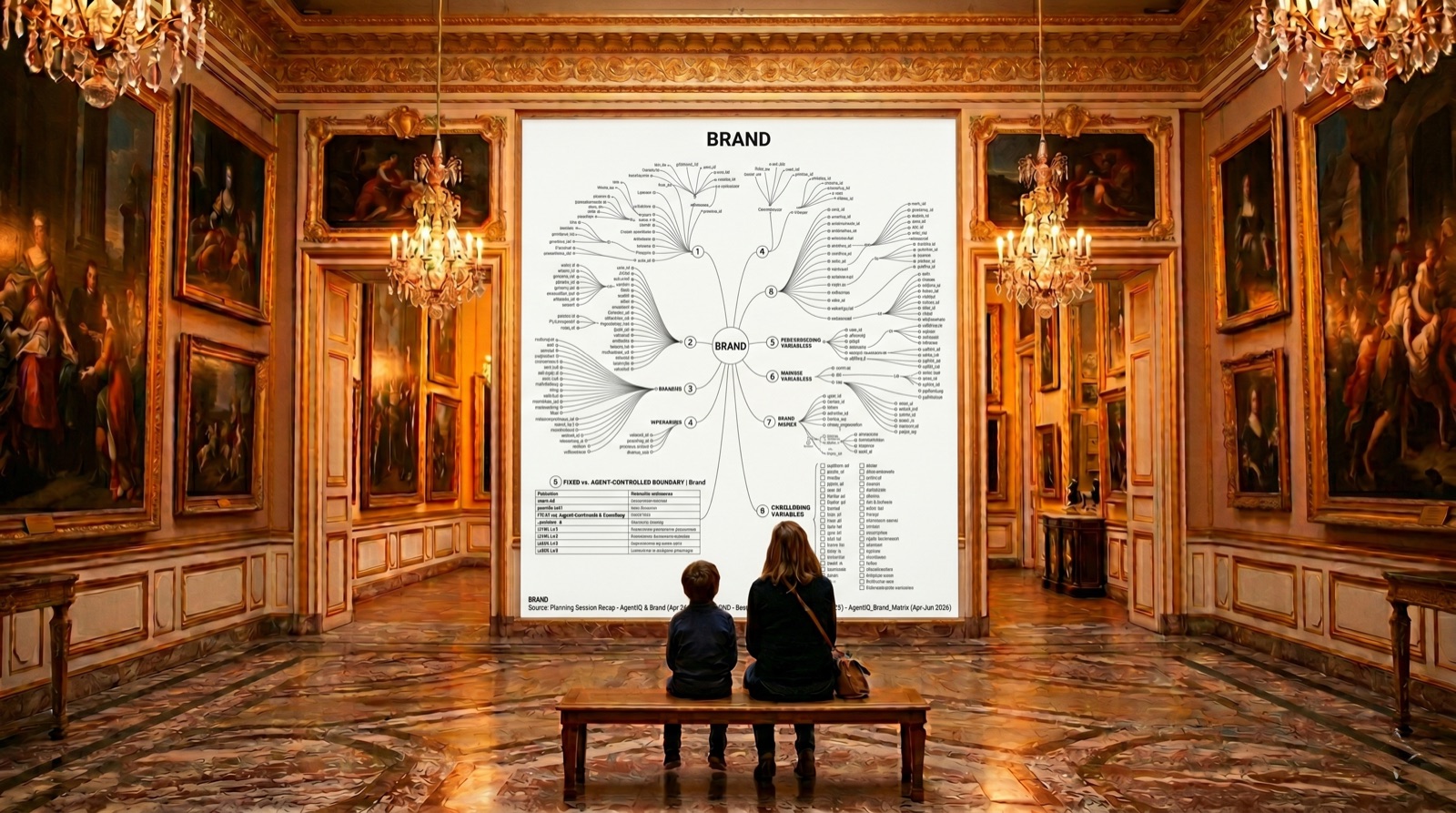
And it carries the brand throughout. Not because a designer placed every element. Because the brand defined the rules the agent works within - the voice, the tone, what gets emphasized and what gets withheld, the aesthetic logic that makes a luxury brand feel quiet and a performance brand feel precise. The brand is no longer in the page. It is in the parameters.
The Merchant's New Job
This changes what it means to design a storefront. And it changes it fundamentally.
The merchant's job was always to make decisions in advance for a shopper they had not met yet. The best merchants were good at imagining who the shopper was, what they needed, what would stop them, what would convert them. They encoded those decisions into layouts, copy hierarchies, and page templates.
That imagination is still required. But the output is different.
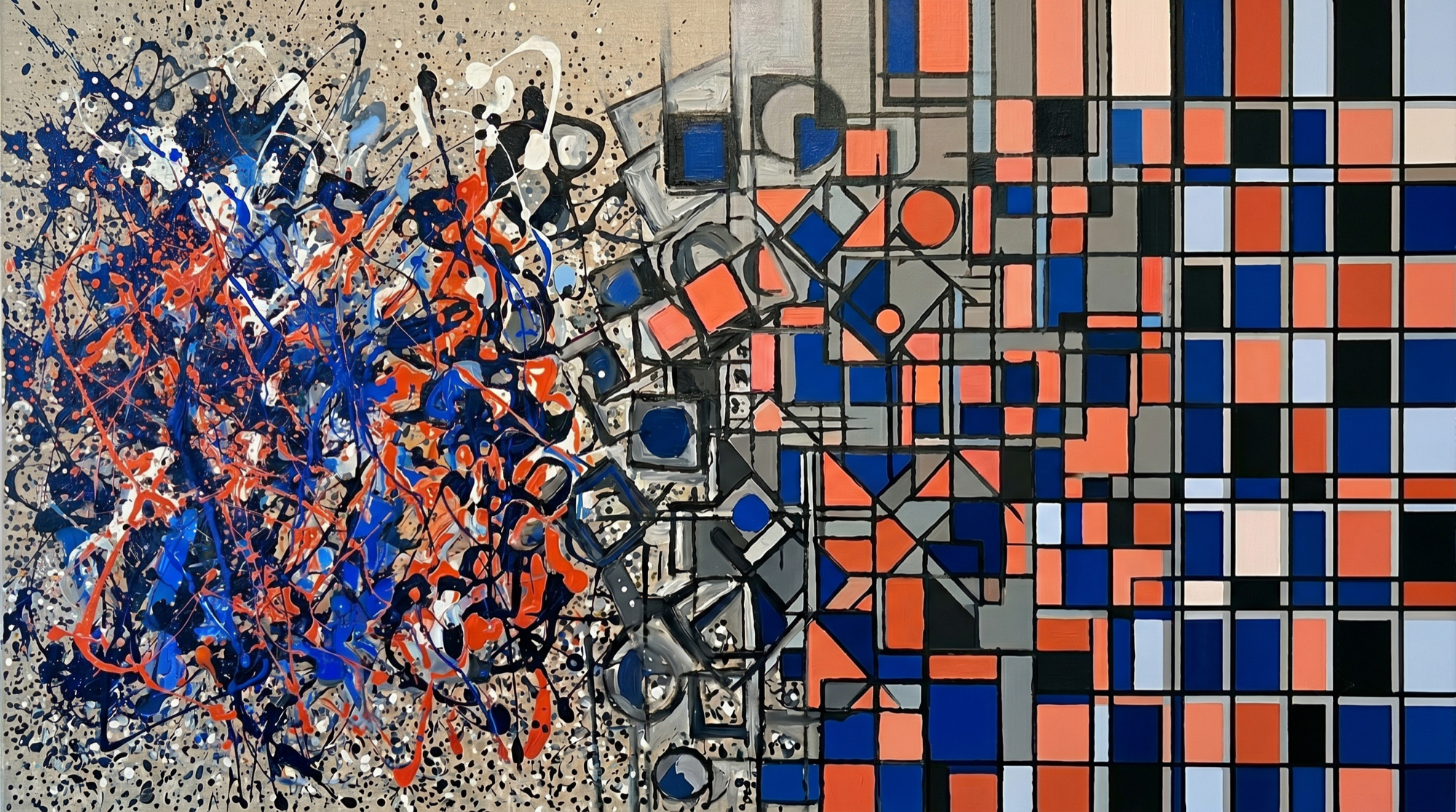
You are no longer designing pages. You are designing the system that designs pages - brand rules, content architecture, parameters that tell the AI agent what your store values, how your products relate to each other, what a good recommendation looks like in your category. The craft shifts from execution to definition. From building the experience to building the logic that builds the experience.
It is a harder job in some ways. More abstract. It requires thinking about your brand not as a visual identity applied to templates but as a set of principles that can be expressed across an infinite number of configurations, none of which you will ever see in advance.
But it is also a more powerful job. Because the store that emerges from well-defined brand logic is not a store that looks the same to everyone. It is a store that feels right to each person who encounters it. That is not something a CMS can produce. It is not something a template can produce. It is something only a design agent, working from brand parameters that a merchant has thought carefully about, can produce.
What the Shopper Finally Gets
On the other side of this is the shopper, and what they finally get is something commerce has been trying to deliver for decades.
A store that knows what they are looking for before they have fully articulated it. That does not make them scroll through 847 results. That surfaces the three things worth considering and explains, briefly, why those three and not the others. That adapts when they push back. That feels less like a catalog and more like a conversation with someone who knows both the inventory and the person.
The experience is unique to them. Not in the personalization sense of “we remembered your last purchase.” Unique in a structural sense, the page they experience does not exist for anyone else. It was assembled for this intent, in this moment, with this person's context in mind.
That is what the shift from CMS to design agent actually delivers on the shopper side. Not a prettier page. A more relevant one. One that meets them where they are instead of asking them to navigate to where the merchant put things.
The brands that understand this will not just see better conversion. They will build something more durable, a store that compounds in relevance over time, because the more the system learns about how different intents map to different experiences, the better it gets at building the right one.
The Last Page
The page is not disappearing tomorrow. The CMS is not going dark. Most merchants will run both for longer than they expect - a static storefront for shoppers who arrive through traditional channels, a dynamic experience for those who arrive through agents.
But the direction is clear. The average page, designed for the average shopper, is already a worse answer than a specific experience designed for this shopper right now. The gap between those two things is only going to widen.
The question for merchants is not whether to make this shift. It is when to start building the thing that makes the shift possible: a brand architecture that an AI agent can actually work from. Not a page. Not a template. A set of parameters precise enough that the design agent that reads them produces something that feels unmistakably like you - every time, for every person, in every configuration it has never been asked to build before.
You spent years designing your store. The next job is designing the logic that designs it for you.
Your next customer will experience a store that assembles itself around them. The brands that win will not be the ones that built the best page. They will be the ones that defined the best parameters, and trusted an AI to do the rest.