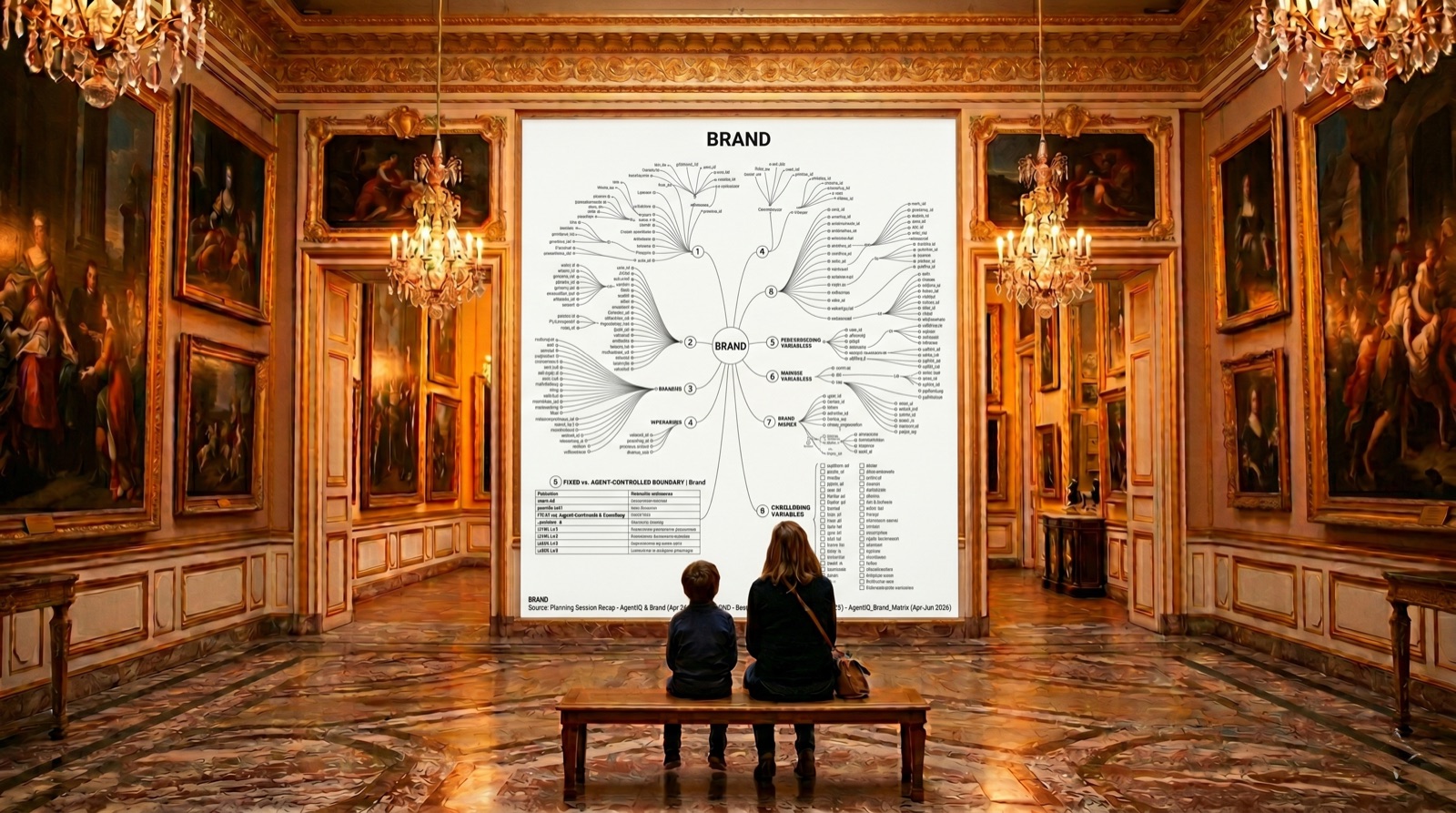
Nobody Likes Your Quiz
New in AMS: agent directives are now live in the AMS conversational storefront. More about the feature at the end of this post.
Nobody has ever finished a seven-question product quiz and thought, “that was fun.”
Nobody has ever closed a “Wait! Complete your look” pop-up and thought, “good call.”
We built both anyway. For 20 years we drew the flow, guessed the persona, hard-coded the upsell at step three and called it personalization.
It was never personalization. It was a script. And shoppers can tell.
We were not wrong about what to sell. We were wrong about how we delivered it.
The Flowchart Was Always a Guess
Every funnel map describes a shopper who does not exist. The average one. The persona on slide four. They land on the home page, browse a collection, open a product, add it to cart and get shown the accessory we decided they need.
Real shoppers do not move like that. One arrives from a search ad already knowing exactly what they want. One is buying a birthday gift for a sister-in-law and has no idea where to start. One just wants to know whether the $300 headphones are really worth $100 more than the $200 pair. The flowchart sends all three down the same path and fires the same “You might also like” at the same step.
So we patched it. More branches. More conditions. If cart value is under the free-shipping line, show this banner. If the product is in category X, show that carousel. Each rule made sense on its own. Together they became a rigid machine that treated a conversation like a conveyor belt.
The knowledge inside those rules was good. Your best store associate knows that someone dressing for a wedding needs the shoes and the bag, not a grid of bestsellers. The problem was never the knowledge. It was that we could only express it as a fixed position on a fixed page.
Seven Questions Before Hello
When the funnel stopped working, we built the quiz.
“Find your perfect match in 60 seconds.” Seven questions, one per screen, in the order the brand chose. Skin type. Budget. Occasion. Then, finally, a recommendation.
The quiz was an honest attempt to listen. But it listened on our terms. The shopper already knew what they wanted to say. They had to wait until question five to say it, and pick from our four options when none of them fit.
A quiz is a flowchart with a friendlier face. It still decides the path in advance.
From Flows to Behavior
In AMS, there is no fixed path to design. The AI agent composes the experience around each shopper as they talk, scroll and add things to their cart. The page is assembled for the person in front of it. We wrote about what that means for the page itself in “The Last Page You Will Ever Design.” This piece is about what it means for the merchant's other job: making the store sell.
If there is no flow, where does the business logic go?
It goes into behavior. Instead of asking “what path should the shopper take?”, you ask “how should my store behave when it meets this situation?” That is a different design question, and it needs a different tool.
We call that tool “agent directives.”
What a Directive Is
An agent directive is a standing rule the agent follows in every conversation: when this happens, do that. A situation the agent can recognize, and what to do in it.
Here is what that can look like:
- A fashion brand: when someone is shopping for an event, build the whole look around the piece they chose. The dress comes with the shoes and the bag that finish it, styled together.
- A beauty brand: when someone is buying for someone else, skip the gift finder. Ask who it is for and one thing they love, then lead with a ready-to-gift set.
- An electronics brand: when someone asks if the cheaper headphones are good enough, answer honestly. If they mention flights or a long commute, then show the noise-cancelling pair and say why it matters for them.
Read them again. None of them say where on the page anything goes. None of them say which step of which flow. They describe a moment, and what a great associate would do in that moment. The agent handles the rest: when it happens, how to say it and how to lay it out for this shopper.
The bundle is still there. So is the upsell. So is the gift flow. They just arrive when they are useful, to the person they are useful for.
Any Business Logic, in Plain Language
Directives are written in natural language. There is no menu of rule types to pick from and no condition builder to fight with. If you can say it to a new hire on their first day, you can say it to the agent.
Still, most of what merchants used to hard-code ends up sounding familiar:
- “Lead with this.” When someone wants something for sensitive skin, start with the fragrance-free line.
- “Suggest this alongside.” When a camera goes in the cart, offer the memory card that fits it.
- “Do this first.” Ask the size before showing options. Answer the question before recommending.
- “Always say this. Never say that.” How you talk about shipping, returns and the claims your brand stands behind, the same way every time.
- “Past this line, behave differently.” When the cart is just under free shipping, suggest something small that actually goes with what is already in it.
Those are examples, not a catalog. A launch week. A product you are overstocked on. The way you want the store to talk about sizing. A rule for first-time visitors that would be annoying for returning ones. If it is part of how your store should sell, it can be a directive.
The Business Goal Does Not Get to Lie
This is where user-first stops being a slogan.
Directives sit on top of the agent's guardrails, never above them. A directive can tell the agent what to lead with. It cannot make the agent invent a product, misstate a spec or dodge the shopper's question. When the shopper asks “are the cheaper ones good enough?”, they get a straight answer first. The recommendation comes after, and it earns its place by being the honest answer.
That ordering matters more than it looks. The hard-coded upsell interrupted. The quiz made you wait. A directive responds. It meets the shopper where they already are, and the commercial move is the helpful move.
Old e-commerce asked shoppers to trust the page. Directives let the store earn it.
Your Best Associate, Written Down
Think about the best salesperson you ever met in a store.
They did not carry a binder of rules. They carried a handful of instincts. The person buying a gift is nervous, so make it easy. The person comparing two models wants the truth, not a pitch. The person who just picked the dress is already imagining the evening, so help them finish it.
That is what a good list of directives reads like. Not a policy manual. A few sharp instincts, written down, that make every conversation feel like it was handled by your best person on their best day.
And like that associate, less is more. Hand a new hire 200 rules and they remember none of them. Hand them a dozen that really matter and they get great fast. The agent works the same way. The discipline is not writing more directives. It is deciding which ones are worth writing at all.
Change It Today, the Next Shopper Gets It
Hard-coded flows were expensive to change. A new upsell meant a ticket, a sprint, a release. Seasonal pushes were planned a quarter ahead and rarely revisited.
Directives are text, set together with our team. Change one today and the next session in your store runs on the new rule. No deploy. A new hero product, a stock-driven pivot, a holiday push: each is a sentence, not a project.
The Associate Never Had a Flowchart
The best salesperson you ever met did not follow a script. They listened, recognized the situation and knew exactly what to show next. They upsold you, and you thanked them for it.
E-commerce spent two decades trying to fake that with flowcharts and quizzes. It does not have to fake it anymore.
So here is the challenge. Write down what your best associate knows. Every “when they say this, show them that.” If you cannot say it in a dozen plain sentences, you do not know your store as well as you think.
About Agent Directives in AMS
AMS is our conversational storefront: an AI agent that builds the store around each shopper as they talk, browse and shop. Agent directives are the newest layer on top of it, the place where your merchandising and sales logic lives.
- Written in plain language. Each directive is a situation and what to do in it. Bundles, upsells, gift flows, promises and thresholds, all as sentences.
- One list, in order. Every directive for your store sits in one short list. When two apply to the same moment, the one further down wins, so precedence is something you can read.
- Live on the next session. Add, edit or retire a directive and the next shopper gets the new behavior. No deploy, no release.
- Guardrails always win. A directive can change what the agent leads with. It can never make the agent invent a product, misstate a spec or dodge a question.
- Set up with our team. Bring your house rules and we write and vet them with you, so every directive is clear, specific and safe before it reaches a shopper.